

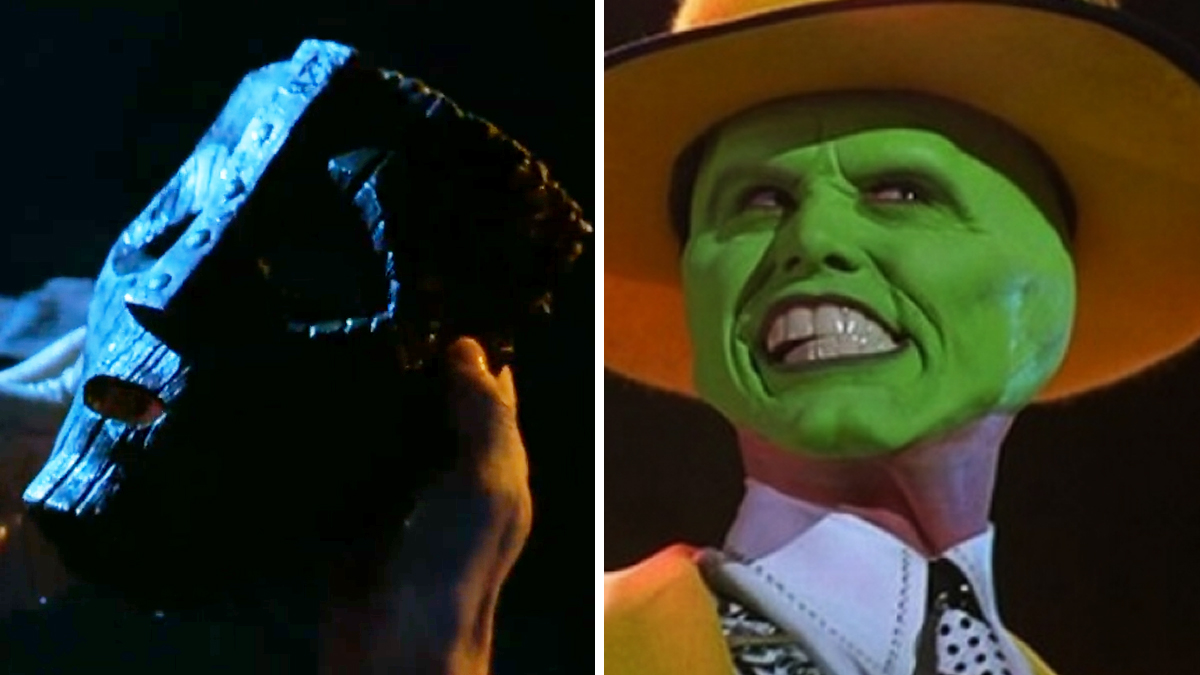

In a twist that seems straight out of Hollywood, archaeologists have unearthed a 2,000-year-old green serpentine mask within Mexico’s Pyramid of the Sun.
This discovery intriguingly mirrors the plot of the 1994 film The Mask, where a mundane mask bestows extraordinary powers upon its wearer.
The Pyramid of the Sun, constructed around 100 CE in Teotihuacan, has long been a treasure trove for archaeologists.

In 2011, researchers from Mexico’s National Institute of Anthropology and History (INAH) ventured into a previously unexplored tunnel beneath the pyramid.
The Pyramid of the Sun, constructed around 100 CE, has long been a focal point for archaeologists.
This excavation led to the discovery of various artefacts, including the notable green mask.
Crafted from serpentine, the mask is distinguished by its realistic human features, suggesting it may have been a portrait or held significant ceremonial importance.
Alongside the mask, offerings such as obsidian pieces, pottery, and animal remains were found, indicating ritualistic activities associated with the pyramid’s construction.
2000-year-old green serpentine stone mask found at the base of the pyramid of the Sun, Teotihuacan, Mexico.#archaeohistories pic.twitter.com/8OZ53p3mNp
— Archaeo – Histories (@archeohistories) July 28, 2021
This ancient mask’s discovery brings to mind the plot of The Mask, where Jim Carrey’s character, Stanley Ipkiss, stumbles upon a mysterious mask that transforms him into a zany, superpowered alter ego.
In the film, the mask is linked to the Norse god Loki, granting the wearer extraordinary abilities. Similarly, people have speculated online that the ancient green mask may have been believed to possess spiritual significance.
While the film’s narrative is fictional, the concept of a mask transforming its wearer draws intriguing parallels to the real-life discovery.
In Mesoamerican cultures, masks were commonly used in rituals, ceremonies, and as offerings to deities.





Discussion